
Article by Vincent Soubiron, published in the Italian magazine Ski&Wake Magazine.
In my previous article, Beyond Technique: Training the Nervous System in Modern Slalom, I wrote about something central to the way I coach: we don’t just train movement, we train the system that produces it.
Technique matters, but what we see on the water is only the visible expression of a much more complex organization underneath.
This leads to a question I ask constantly when I coach: when we see a technical mistake, are we sure we are looking at the actual problem?
Take something as common as a skier arriving narrow into the buoy. The temptation is to correct what we see: create more width, hold direction longer, change the edge change, move the center of mass differently or modify the turn. Any of those corrections may be relevant, but only if we first understand why the skier is narrow.
One skier may not be carrying enough momentum through the edge change. Another may be generating too much load behind the boat and spending the second half of the crossing managing the consequences. Another may have enough speed but be directing it poorly. Someone else may be organizing the approach around where they are looking, while another skier may be relying on rope tension to provide balance that should already exist between the body and the ski.
From the boat, the result can look remarkably similar. What produced it can be completely different.
That distinction has always been fundamental to my coaching. I don’t want to correct a position simply because it doesn’t correspond to an ideal picture of what a skier should look like. I want to understand how the skier arrived there. What happened earlier? What information did the skier perceive? What happened to speed, direction, balance and rope tension? What was the intention, and how did the body organize itself around it?
Changing Constraints Instead of Giving the Answer
This is why I use changes in constraints so much in training. Instead of immediately telling a skier what to change, I may change the conditions around the athlete and observe how the system responds. What happens next often tells me far more than the original mistake itself.
But changing constraints is not only a diagnostic tool. I also use them to challenge the robustness of an organization that already works.
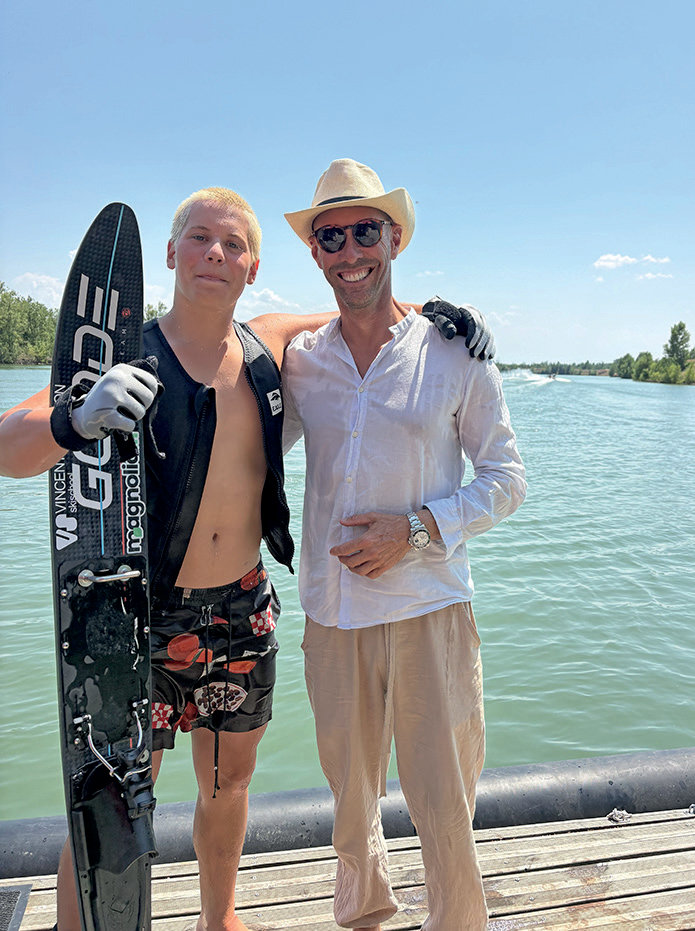
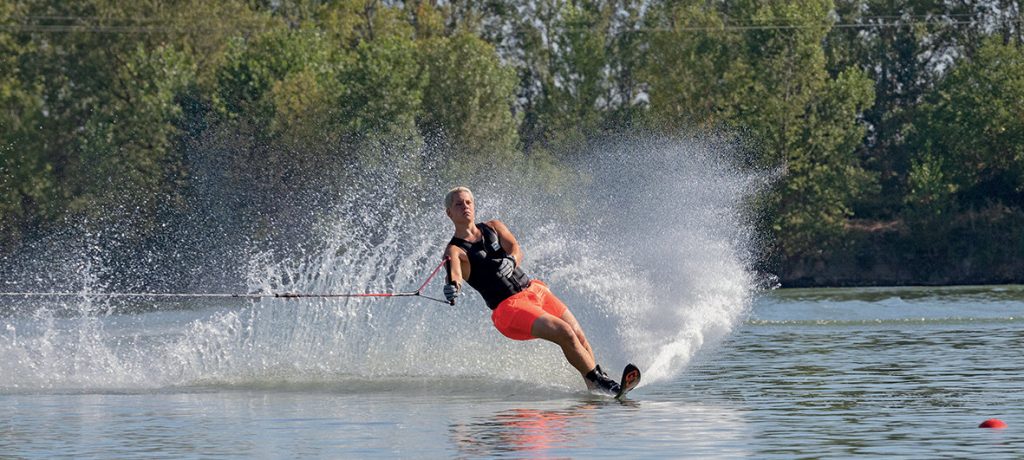
Emil Maumy, who is thirteen and recently became European Champion, is already skiing at an exceptional level for his age. One of the sets I regularly give him is very simple on paper: six consecutive passes starting directly at 12 m. Running 12 m once is one thing. Being asked to run it six times is something else.
The purpose is not simply to accumulate difficult passes. What interests me is what happens to the skier when the same demanding task has to be solved again and again. By the sixth pass, it may look like the same 12 m on paper, but for the athlete, it is no longer exactly the same problem. And that is precisely what I am interested in.
So the question is no longer simply, “Can you run 12 meters?” It becomes: “What happens to your skiing when running 12 meters once is no longer enough?”
For me, this is where repetition becomes more than repetition. It becomes information.
This is why I often think of drills as tests as much as exercises. A good drill doesn’t simply teach an athlete what to do. It reveals how the athlete is solving the problem.
Ready to Adapt to Any Condition
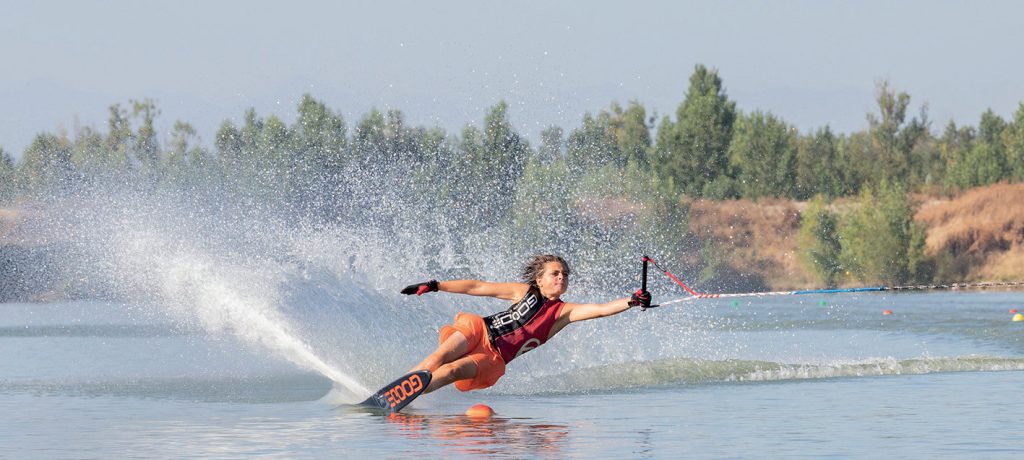
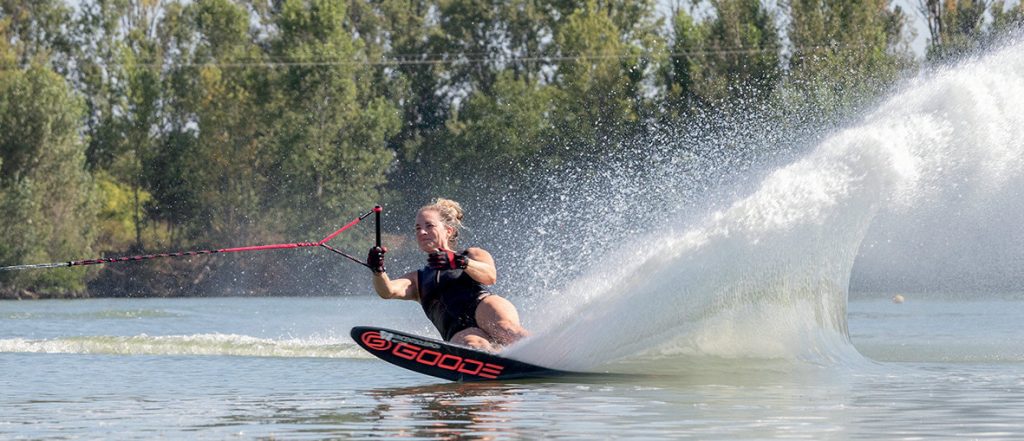
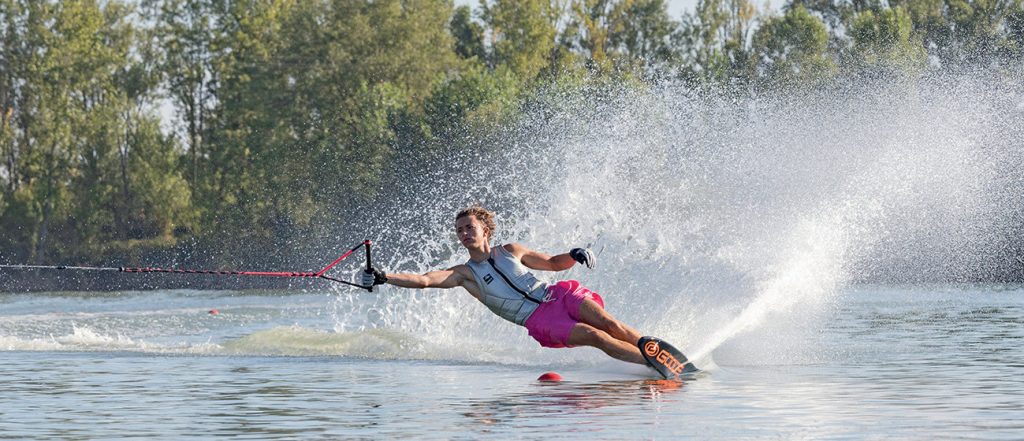
And this matters because slalom is never completely repeatable. You cannot prepare an athlete for every water condition, every boat, every mistake or every competitive situation. Adaptability isn’t about being ready for every condition. It’s about being ready to adapt to any condition.
That is also why I don’t want every skier to reproduce the same technical model. Two athletes can show exactly the same technical problem and require completely different interventions. They have different bodies, histories, perceptions, timing and ways of organizing movement.
Technique gives us principles. But the expression of those principles belongs to the individual.
A skier can arrive convinced that they know what their problem is because they have watched it hundreds of times on video. Sometimes they are right. Sometimes, within a few passes and a change of constraint, we discover that the thing they have been trying to correct for months or years is only the consequence of something happening much earlier.
That is when progress can happen very quickly. Not because we have found a magical drill, but because we have finally identified the right problem. And in high-performance coaching, asking the right question is often more valuable than having another answer.
Vincent Soubiron
Sponsors: Connelly, Slines, Miami Nautique, Procalp, Pro Ski Simulator, Volodalen
Want to progress with this approach? Contact us.